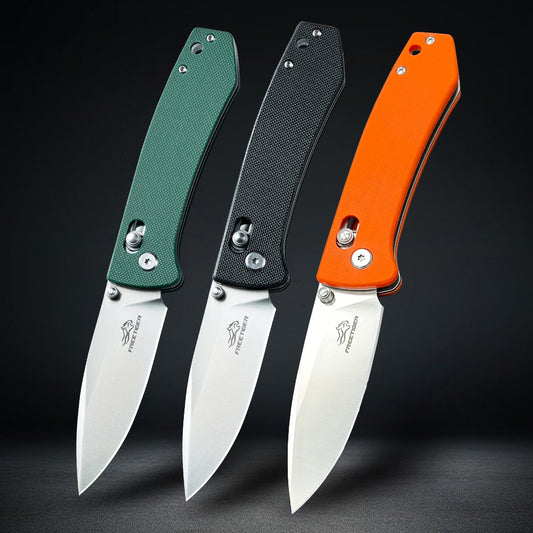
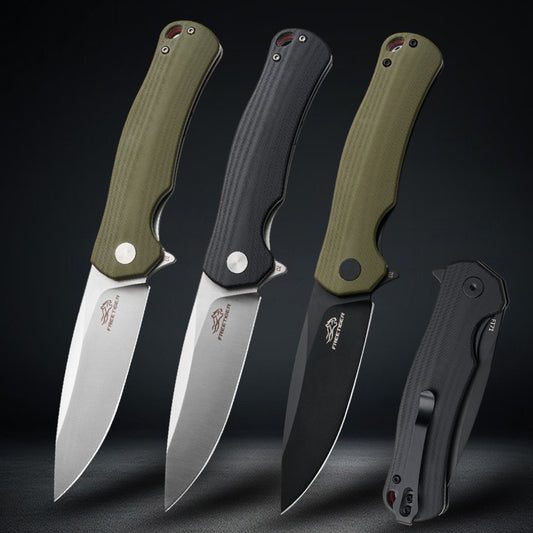
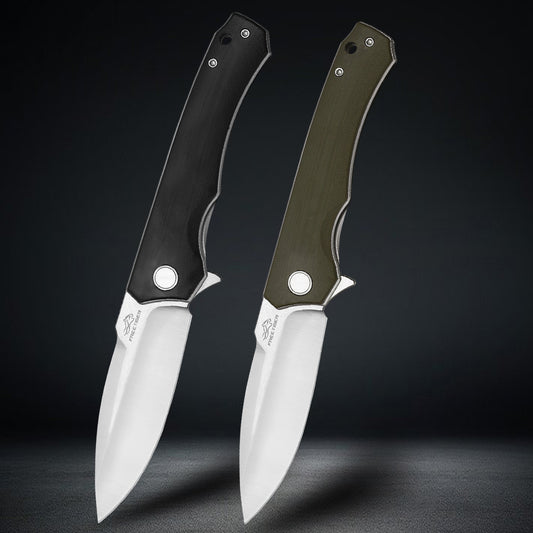
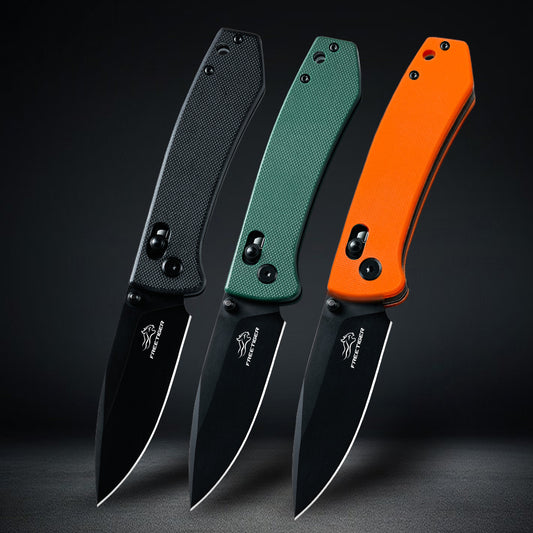
Liner Lock vs Axis Lock – Which One Actually Holds Up?
I’ve Had Both Locks Fail on Me (Sort Of)
Let me start with something most knife reviewers won’t admit.
I’ve had a liner lock close on my finger. Not badly – just a pinch. But it happened. And I’ve also had an Axis lock spring break after two years of constant fidgeting.
So neither is perfect.
But here’s the thing: I still carry both. Because when they’re done right, both locking mechanisms are perfectly safe for 99% of what you’ll actually do with a folding knife.
In this guide, I’ll walk you through:
- How each lock actually works (simple version)
- Strength and reliability in real life
- The “fidget factor” (yes, it matters)
- Maintenance and long-term wear
- Which one I recommend for camping, hunting, and daily EDC
Let’s dig in.

First, a Quick Look at How Each Lock Works
I’ll keep this simple. You don’t need an engineering degree.
Liner Lock – The Classic
The liner lock is one of the oldest and most common locking mechanisms on folding knives.
Inside the handle, there’s a metal liner (usually stainless steel) cut out from the handle scale. When you open the blade, that liner springs inward and wedges behind the blade tang, holding it open.
To close it, you push that liner back to the side with your thumb, then fold the blade.
Why it’s popular: Cheap to make, easy to use, and works fine.
The weak point: If you grip the knife really hard (like during a stab – which you shouldn’t do with a folder anyway), you can accidentally push the liner back and unlock it. Also, liner locks can wear down over years of use.
📌 Real talk: I’ve never had a quality liner lock fail during normal cutting. Not once. The only time I had one close on me was with a cheap $10 knife.

Axis Lock (Crossbar Lock) – The Fidget Favorite
The Axis lock (also called a crossbar lock – Benchmade owns the “Axis” name, but other brands make similar locks) uses a spring-loaded bar that slides back and forth across the blade tang.
When the blade is open, that bar drops into a notch on the tang and locks it solid. To close it, you pull both sides of the bar back, releasing the blade.
Why people love it: It’s ambidextrous, smooth as butter, and you can flick the knife open and closed without ever touching the blade.
The weak point: Those tiny omega springs can break. I’ve had it happen once in eight years. It’s fixable, but annoying.
📌 Real talk: An Axis lock with broken springs still works – the blade just doesn’t lock open. You can still close it safely. But you’ll want to replace the springs.

Head-to-Head: Liner Lock vs Axis Lock
Let me break this down by what actually matters when you’re using a knife.
1. Lock Strength
| Lock Type | Strength | Real-world safety |
|---|---|---|
| Liner Lock | Good (depends on thickness) | Safe for all normal cutting |
| Axis Lock | Very Good | Very safe, but springs can fail |
Winner: Axis lock (slightly)
A well-made liner lock is strong enough for 99% of tasks. But an Axis lock feels more solid in hand because there’s no liner to accidentally push.
That said – don’t baton with either lock. Get a fixed blade for that.
2. Fidget Factor (Be Honest, You Care)
| Lock Type | One-handed open/close | Fun factor |
|---|---|---|
| Liner Lock | Yes (with practice) | Good |
| Axis Lock | Yes (effortless) | Excellent |
Winner: Axis lock by a mile
There’s a reason Axis lock knives sell out fast. Pulling back that bar and watching the blade swing freely is just satisfying. You’ll find yourself opening and closing it constantly.
I’m guilty of this.
3. Ambidextrous Use
| Lock Type | Left-handed friendly |
|---|---|
| Liner Lock | No (usually) |
| Axis Lock | Yes |
Winner: Axis lock
Most liner locks are cut for right-handed users. Lefties have to use their thumb across the handle – it works, but it’s awkward.
An Axis lock uses a central bar. Left or right, it’s exactly the same.
4. Maintenance and Long-term Reliability
| Lock Type | Maintenance | Common failure |
|---|---|---|
| Liner Lock | Low | Lock wear (years of use) |
| Axis Lock | Low | Omega spring break (rare) |
Winner: Tie
A good liner lock will last decades. A good Axis lock will also last years, but you might need to replace a spring eventually. Spring replacement kits cost a few dollars and take ten minutes.
5. Ease of Cleaning
| Lock Type | Gets gummed up? | Easy to flush? |
|---|---|---|
| Liner Lock | Yes | Pretty easy |
| Axis Lock | Yes (more parts) | Harder |
Winner: Liner lock
If you use your knife for food prep or outdoor work, gunk will get inside the pivot. Liner locks are simpler – you can usually rinse them out.
Axis locks have more nooks and crannies. Pocket lint and dried food can make the action gritty. A quick disassembly fixes it, but it’s more work.
📌 Pro tip: For camping and hunting, I slightly prefer liner locks because they’re easier to clean in the field. For EDC in clean environments, Axis locks are fine.
Which Lock Should You Actually Buy?
Here’s my honest advice after years of carrying both.
Buy a Liner Lock if:
- You want something simple and proven
- You use your knife outdoors or for food prep (easier to clean)
- You’re on a budget (liner locks are cheaper)
- You don’t care about fidgeting
Best for: Hunting, camping, fishing, hard outdoor use
Buy an Axis Lock if:
- You’re a fidgeter (be honest, you are)
- You want ambidextrous operation
- You like super smooth action
- You don’t mind a slightly more complex mechanism
Best for: Daily EDC, office carry, showing off to knife friends
What About Other Locks?
I kept this comparison focused on liner and Axis locks because they’re the most common on folding knives in our price range.
But for the curious:
- Frame lock – Similar to liner lock, but the handle scale itself bends. Stronger, but more expensive.
- Compression lock – Spyderco’s design. Like a liner lock on top. Very strong, but harder to use left-handed.
- Button lock – A push-button. Very fun, but not as strong as a good Axis lock.
For most people, liner and Axis locks are the sweet spot.
Maintenance Tips for Both Locks
Keeping your Liner Lock happy:
- Blow out pocket lint regularly
- A drop of light oil on the pivot every few months
- Don’t force the liner past the blade tang (it can bend)
Keeping your Axis Lock happy:
- Same as above – keep it clean
- If the action gets gritty, flush with isopropyl alcohol, then re-oil
- If a spring breaks (rare), buy a $5 spring kit and follow a YouTube tutorial – it’s not hard
Frequently Asked Questions (FAQ)
Is an Axis lock stronger than a liner lock?
Generally, yes. But both are strong enough for any normal folding knife task. Don’t choose based on strength alone.
Can an Axis lock fail?
Yes – the omega springs can break. But the knife still works as a slip joint. Replacement springs are cheap and easy to install.
Can a liner lock fail?
Yes – if the liner is too thin or wears down over many years. Cheap liner locks are risky. Good ones are not.
Which lock is better for lefties?
Axis lock, 100%. Liner locks are almost always right-hand biased.
I fidget with my knife constantly. Which lock will last?
Axis lock. The springs are designed for many cycles. I’ve fidgeted with mine for two years before a spring broke. Liner locks can wear down faster if you flick them open hard every day.
The Bottom Line
Look, neither lock is perfect. But both are good.
If you want my personal opinion: I carry an Axis lock for EDC because I’m a fidgeter and I like the smooth action. When I go camping or hunting, I grab a knife with a solid liner lock because it’s easier to clean and I trust it with wet or dirty hands.
You don’t need to pick one forever. Try both. See what feels right in your hand.
And if you’re still not sure – just pick the one that looks cooler. Life’s too short to overthink a pocket knife.
See What We Have in Stock
We carry folding knives with both lock types: