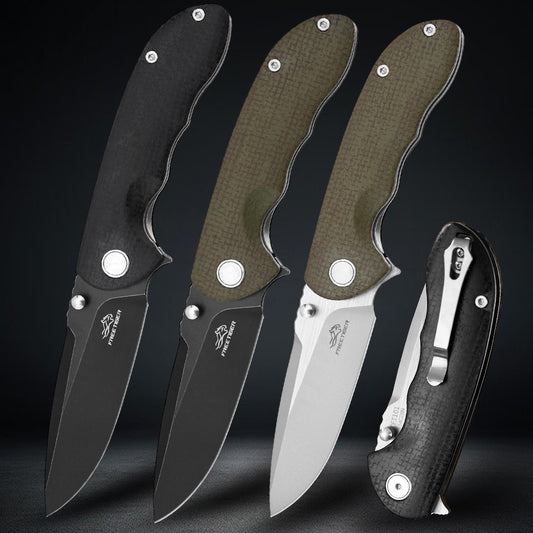
Sandvik 14C28N vs D2 Steel – Which Blade is Better for Your EDC?
Confused between Sandvik 14C28N and D2 steel for your folding knife? Compare edge retention, toughness, corrosion resistance, and real-world EDC performance here.
Introduction
Choosing the right blade steel is one of the most important decisions when buying a folding knife. Two popular options in today’s EDC and outdoor market are Sandvik 14C28N and D2 tool steel.
But which one is right for you?
In this guide, we compare both steels across four key areas:
- Edge retention
- Toughness
- Corrosion resistance
- Ease of sharpening
By the end, you’ll know exactly which blade steel fits your daily carry or camping needs.

What is D2 Steel?
D2 is a high-carbon, high-chromium tool steel. It is often called a “semi-stainless” steel because its chromium content (about 12%) is just below the stainless threshold.
Key properties of D2:
- ✅ Excellent edge retention – holds a working edge for a long time
- ❌ Lower toughness – can micro-chip under heavy lateral stress
- ⚠️ Moderate corrosion resistance – not stainless; needs basic care
- 🔧 Harder to sharpen – requires diamond stones or ceramic rods
D2 is widely used in folding knives for hunting, bushcraft, and EDC where users prioritize edge holding over ease of sharpening.
📌 In real-world tests, D2 keeps a working edge significantly longer than 14C28N when cutting cardboard, rope, or wood.

What is Sandvik 14C28N?
Sandvik 14C28N is a stainless steel developed for razor blades and kitchen cutlery. It contains added nitrogen, which improves both corrosion resistance and hardness without sacrificing toughness.
Key properties of 14C28N:
- ✅ Very high toughness – resists chipping and rolling
- ✅ Excellent corrosion resistance – true stainless steel
- ✅ Easy to sharpen – responds well to strops and fine stones
- ⚠️ Lower edge retention than D2 in abrasive cutting
14C28N is ideal for outdoor, camping, and daily EDC tasks where the blade may get wet or encounter hard use.
📌 According to user feedback from knife communities, 14C28N performs exceptionally well in scooping cuts, feather sticking, and food prep without micro-chipping.
Head-to-Head Comparison: 14C28N vs D2
1. Edge Retention
| Steel | Edge Retention (Relative) | Best For |
|---|---|---|
| D2 | High | Prolonged cutting of abrasives |
| 14C28N | Medium | General EDC and utility tasks |
Winner: D2
2. Toughness
| Steel | Toughness (Impact resistance) |
|---|---|
| D2 | Moderate (can micro-chip) |
| 14C28N | High |
Winner: 14C28N
3. Corrosion Resistance
| Steel | Stainless? | Rust Risk |
|---|---|---|
| D2 | No | High in humid/wet use |
| 14C28N | Yes | Very low |
Winner: 14C28N
4. Ease of Sharpening
| Steel | Sharpening Difficulty |
|---|---|
| D2 | Harder – needs diamond abrasives |
| 14C28N | Easy – sharpens quickly on ceramic or fine stones |
Winner: 14C28N

Which Steel Should You Choose?
✅ Choose D2 if you:
- Cut a lot of abrasive materials (cardboard, rope, carpet)
- Don’t mind occasional rust prevention (wipe and oil the blade)
- Have experience sharpening harder steels
- Want a knife that stays sharp for weeks of normal use
✅ Choose 14C28N if you:
- Use your knife near water, food, or in humid conditions
- Need a tough blade that won’t chip or roll
- Prefer quick, easy sharpening
- Want a true stainless steel for camping and outdoor tasks
🔪 Pro tip: If you’re looking for a single folding knife for camping, hunting, and daily EDC, 14C28N is often the safer choice. D2 is better for dedicated work knives that stay dry.

Real-World Examples from Our Collection
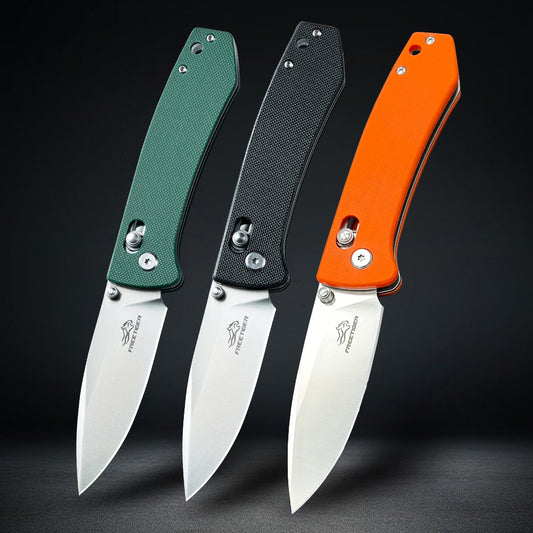
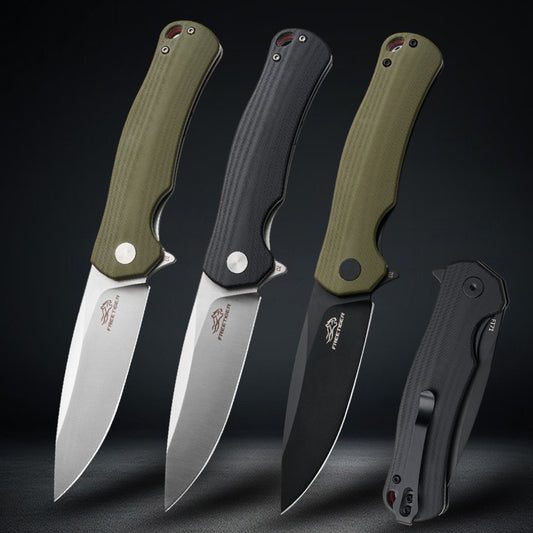
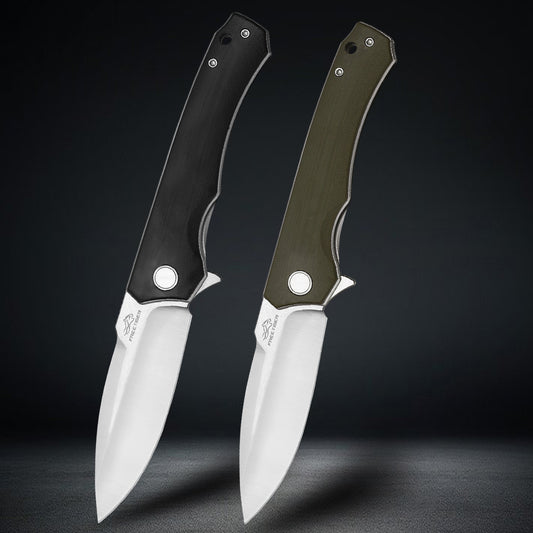
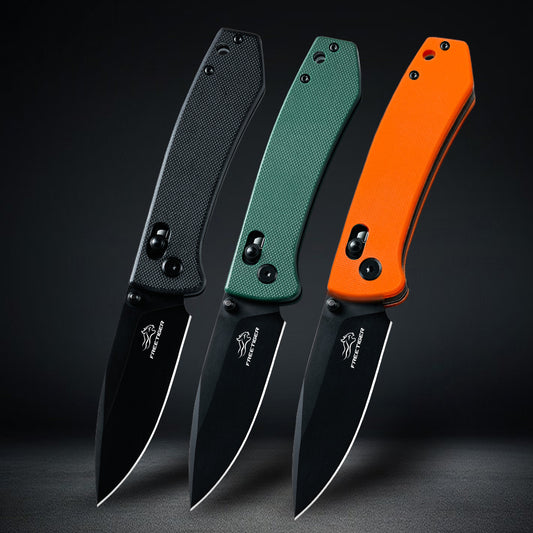
At [Your Shop Name] , we offer folding knives in both steels:
- D2 models – Ideal for heavy cutting and long intervals between sharpenings
- 14C28N models – Perfect for outdoor adventures, food prep, and worry-free carry
👉 Shop D2 folding knives
👉 Shop 14C28N folding knives
How to Maintain Each Steel
Maintaining D2 blades:
- Wipe dry after each use
- Apply a light coat of mineral oil or knife oil weekly
- Sharpen with diamond stones or ceramic rods
- Avoid leaving the knife in wet sheaths or pockets
Maintaining 14C28N blades:
- Rinse and dry after cutting food or wet materials
- No regular oiling required
- Strop regularly to maintain the edge
- Sharpen easily on fine ceramic or water stones
Frequently Asked Questions (FAQ)
Does D2 steel rust easily?
Not as easily as carbon steel, but yes – D2 can rust if left wet. It is semi-stainless, not fully stainless. A little care goes a long way.
Is 14C28N better than D2 for camping?
For most campers, yes. The toughness and corrosion resistance of 14C28N make it ideal for feather sticking, food prep, and use in damp environments.
Which steel holds an edge longer?
D2 holds an edge significantly longer than 14C28N in abrasive cutting. But 14C28N is much easier to bring back to a razor edge.
Can I use 14C28N for hunting?
Absolutely. Its fine grain structure allows for a very sharp, stable edge – great for processing small game.
Conclusion
Both Sandvik 14C28N and D2 are excellent blade steels. Your choice depends entirely on your use case:
- Go with D2 for long-edge-retention work in dry conditions
- Go with 14C28N for tough, stainless, low-maintenance EDC and outdoor use
Still not sure? Browse our collection and read real customer reviews for each steel.